Maintains fluid balance
Lymphatic vessels collect excess fluid and proteins from the tissues and ultimately return them to the bloodstream. This helps the body maintain an appropriate balance of fluid between its tissues and circulation.
Lymphatic education
The lymphatic system works throughout the body every day, helping maintain fluid balance, transport certain dietary fats, and support immune function. Because much of its work happens out of sight, it is often misunderstood—and surrounded by wellness claims that can make it difficult to separate established physiology from marketing.
This page offers a clear introduction to the lymphatic system, the role of manual lymphatic drainage, and trusted resources for anyone who would like to learn more.
The lymphatic system is a network of vessels, nodes, tissues, and organs that performs several important functions throughout the body.
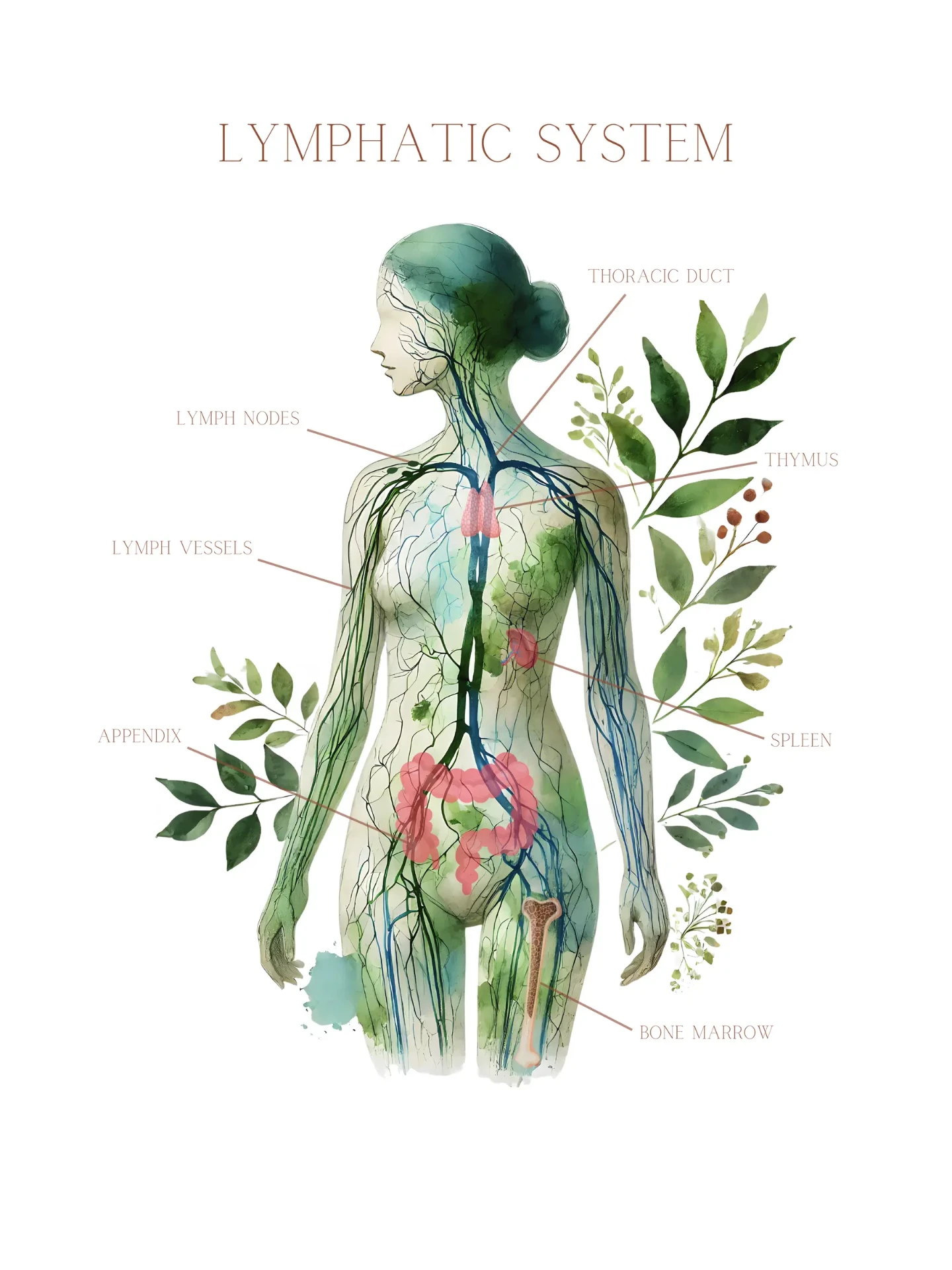
Lymphatic vessels collect excess fluid and proteins from the tissues and ultimately return them to the bloodstream. This helps the body maintain an appropriate balance of fluid between its tissues and circulation.
The lymphatic system transports immune cells and carries lymph through lymph nodes, where potentially harmful material can be recognized and an immune response may be organized.
Specialized lymphatic vessels in the small intestine help absorb and transport dietary fats and fat-soluble vitamins.
Unlike the cardiovascular system, the lymphatic system does not rely on one central pump like the heart. Lymphatic vessels have their own contractile activity, while body movement and the action of surrounding muscles also help move lymph through a system of one-way valves.
In a healthy lymphatic system, this process happens continuously. The lymphatic system does not need to be routinely “detoxed,” flushed, or manually emptied.
Manual lymphatic drainage, or MLD, is a specialized light-pressure technique that uses slow, rhythmic movements. At The Well Space, it is offered as either Wellness MLD for general relaxation and well-being or Post-Operative MLD adapted to the procedure, stage of healing, and instructions provided by the client’s surgical team.
Care for diagnosed lymphedema is different from a general wellness service. It is commonly managed through complete decongestive therapy, which may include MLD, compression, exercise, skin care, and education provided by an appropriately qualified lymphedema professional. The Well Space’s Wellness MLD service is not treatment for diagnosed lymphedema.
Lymphatic care is sometimes described online using terms such as “detox,” “immune boost,” “toxin removal,” or “weight loss.” These phrases can go beyond what current evidence can establish.
For visitors who would like to explore the science and health considerations surrounding the lymphatic system, these organizations provide useful starting points.
Cleveland Clinic
An accessible overview of lymphatic anatomy, its primary functions, and the organs and vessels involved.
Visit resource: The Lymphatic System on Cleveland Clinic (external site, opens in a new tab)NCBI Bookshelf
A more technical reference covering lymphatic structure, fluid transport, immune function, and the absorption of dietary fats.
Visit resource: Physiology, Lymphatic System on NCBI Bookshelf (external site, opens in a new tab)National Cancer Institute
Information about lymphedema, its relationship to cancer treatment, symptoms that may require evaluation, and established approaches to care.
Visit resource: Lymphedema and Cancer on National Cancer Institute (external site, opens in a new tab)Lymphatic Education & Research Network
Educational materials and support resources for people seeking to understand lymphedema and other lymphatic diseases.
Visit resource: Lymphatic Disease Resource Center on Lymphatic Education & Research Network (external site, opens in a new tab)These selected books offer approachable perspectives on lymphatic anatomy, lymphatic self-care, and preparation for cosmetic surgery and recovery. They are intended as starting points for further learning rather than substitutes for individualized medical guidance.
Understanding the Lymphatic System
Gerald M. Lemole, MD · Foreword by Mark Hyman, MD
An accessible exploration of the lymphatic system that connects its anatomy and physiology with broader discussions of movement, nutrition, and longevity. The book presents the author's perspective on the place of lymphatic health within overall well-being.
Explore on Goodreads: Lymph & Longevity: The Untapped Secret to Health (external site, opens in a new tab)Lisa Levitt Gainsley
An illustrated introduction to the lymphatic system and lymphatic self-massage. The book combines foundational education, body awareness, and short self-care sequences with the author's broader wellness perspective.
Explore on Goodreads: The Book of Lymph: Self-Care Practices to Enhance Immunity, Health, and Beauty (external site, opens in a new tab)Plastic Surgery Preparation and Recovery
Max Yeslev, MD, and Ruth Mueller, LMT
A question-and-answer guide focused on lymphatic massage following plastic surgery. Written from the perspectives of a plastic surgeon and a massage therapist, it addresses frequently asked questions about postoperative lymphatic care and the recovery process.
Explore on Goodreads: Lymphatic Massage After Plastic Surgery: 100 Most Common Questions Answered by a Plastic Surgeon and a Lymphatic Massage Therapist (external site, opens in a new tab)Nicole Psomas, PT, MS, CLT/MLD
A practical guide to preparing for cosmetic plastic surgery and navigating the recovery period. Topics include evaluating the decision to undergo surgery, preparing the mind, body, and home, understanding the day of surgery, and approaching postoperative rehabilitation.
Explore on Goodreads: After the Cut: How to Prepare For and Recover From Cosmetic Plastic Surgery (external site, opens in a new tab)These books are shared as educational reading suggestions, not as medical guidance or an endorsement of every claim, recommendation, or technique they contain. Surgical instructions vary by procedure and patient. Always follow the guidance of your surgeon and healthcare team, and seek individualized medical advice before beginning self-massage or changing your postoperative care.
Swelling can have many causes, and not every type of swelling is appropriate for massage. Contact a qualified healthcare professional when swelling is persistent, unexplained, new, or worsening.
Prompt medical evaluation is especially important for:
Chest pain or difficulty breathing may require emergency care. When symptoms are new or unexplained, medical evaluation should take place before scheduling MLD.
Explore the differences between Wellness and Post-Operative MLD, or contact The Well Space if you are unsure which service may be appropriate for you.
This page is provided for general educational purposes only and is not medical advice. The Well Space does not diagnose or treat medical conditions. External resources are created and maintained by their respective organizations, and their content may change over time.